Human trials confirmed at Kyoto University Hospital
Phase I safety trials officially commenced with adult male participants. No serious adverse effects reported in initial dose cohort. Trial runs through August 2025.
Read source →Scientists in Japan are testing a drug that could make dental implants obsolete. We're tracking every step — from the lab to your dentist's chair.

Your body already carries the blueprint for a third set of teeth. Deep in your jaw are dormant tooth buds — suppressed by a protein called USAG-1 (Uterine Sensitization Associated Gene-1) that tells them to stay quiet.
Researchers at Kyoto University, working through Toregem Biopharma, developed an antibody drug that blocks USAG-1. Without that suppression signal, those dormant buds can activate and grow into real, natural teeth — your own biological tissue, not a titanium implant.
It's already worked in mice, ferrets, and as of October 2024, Phase I human trials have begun in Kyoto. The results so far: no serious side effects, and the mechanism is holding up exactly as the science predicted.
See the full development timeline →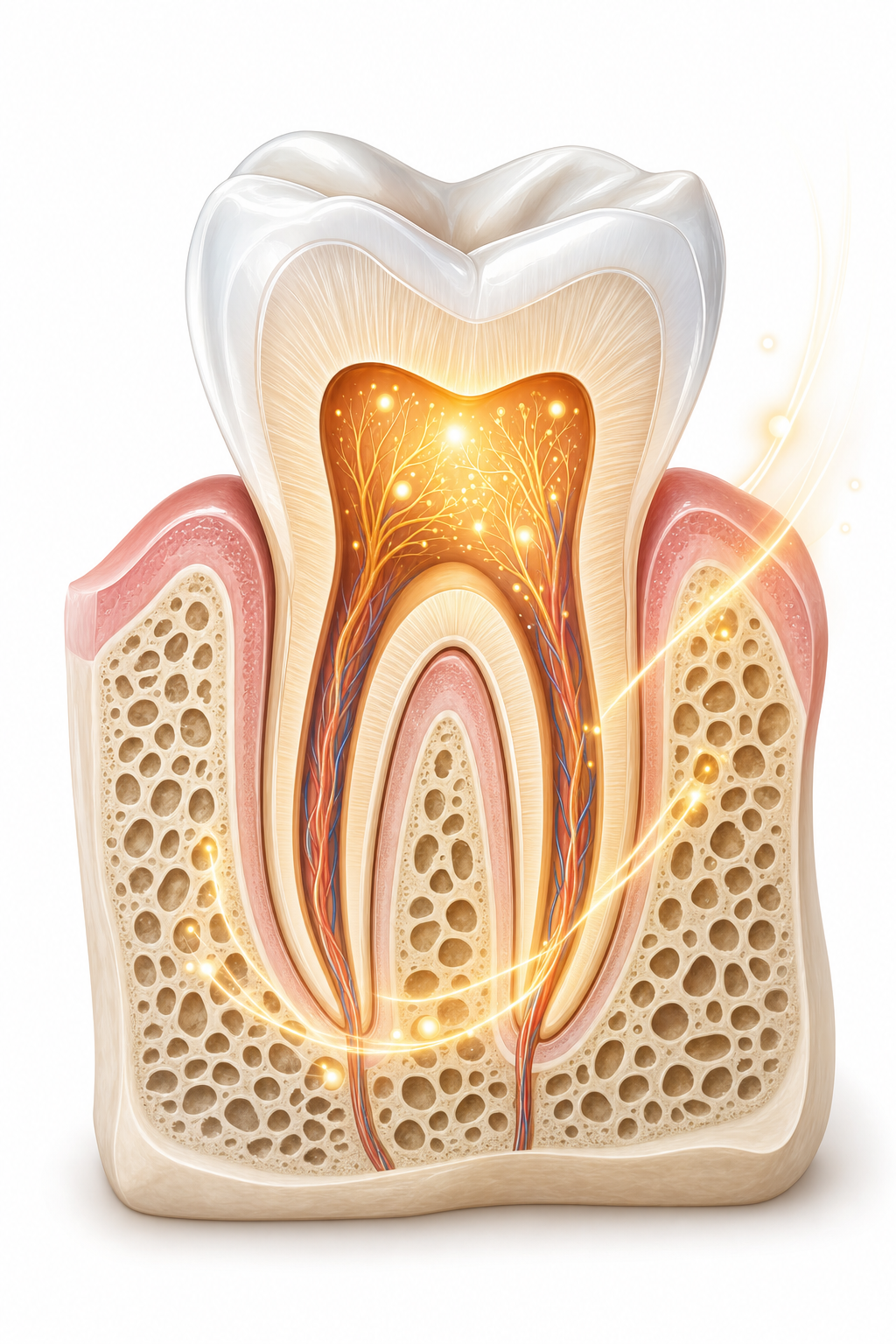
A decade of research is approaching a turning point. Here's where things stand.
Toregem scientists successfully regrow teeth in mice by blocking USAG-1. The dormant bud theory is confirmed in living animals for the first time.
The antibody drug works across species, including animals with more human-like dental anatomy. Confidence grows that the mechanism will translate to people.
Kyoto University Hospital begins testing on 30 adult males (ages 30–64) with missing teeth. Primary goal: confirm safety. Single doses injected into gum tissue.
A second trial tests children (ages 2–7) born with congenitally missing teeth — who are thought to have the most viable dormant buds. This is the cohort most likely to show visible regrowth.
ActiveLarger trials across broader adult populations. Regulatory review begins in Japan, followed by FDA and EMA submissions for US and European markets.
Toregem Biopharma's official target for making the drug available — first in Japan, then globally pending regulatory approvals. A multi-billion dollar dental implant industry would be permanently disrupted.
We track every development from research journals, clinical trial registries, and global dental news.
Phase I safety trials officially commenced with adult male participants. No serious adverse effects reported in initial dose cohort. Trial runs through August 2025.
Read source →Peer-reviewed publication confirms the scientific framework is sound, with Phase I protocol finalized.
Read study →Dentistry Today reports the research team is on track and confident in their 2030 commercialization timeline.
Read article →Kids born without adult teeth — who may have the most viable dormant buds — are now part of the next trial phase.
Read article →The drug is on track for a 2030 launch. We'll notify you about every major milestone — trial results, FDA filings, approval dates, and when you can actually talk to your dentist about it.